Breast Uplift Surgery in Turkey
A breast uplift, or mastopexy, is surgery to lift and reshape the breasts. Explore suitability, incision options and your personal treatment arrangements in Turkey with Revitalize.
Your personal quotation follows a surgeon’s assessment of your health, breast anatomy and goals. The written plan should name your surgeon and facility and specify treatment, accommodation, transfers, follow-up and exclusions. Confirm your planned stay and travel clearance with the surgeon before booking flights.
GET A QUOTE
Individual surgical assessment | Personal patient support | Written service inclusions
THE PROCEDURE
What is breast lift?
A breast lift (mastopexy) removes excess skin and reshapes breast tissue. The surgeon chooses an incision pattern according to breast shape, skin laxity and nipple position. Scars are permanent, although they may become less noticeable over time.
A lift and breast augmentation address different concerns. Discuss whether a lift alone, implants or a staged approach would suit your goals; additional procedures are not automatically appropriate.
Revitalize helps you discuss these choices with the relevant contracted plastic surgeon and understand your individual assessment and treatment process.
A patient’s breast surgery experience
Watch Lisa’s breast surgery journey for a personal account of consultation and treatment in Turkey. This is a broader breast surgery story; it should not be read as an example of the exact procedure recommended for you. Individual experiences and results vary.
For practical planning, read about recovery and aftercare support in Turkey, and ask which follow-up arrangements apply after you return home.
Understanding your quote
Your price for a breast uplift is confirmed in writing after a free online consultation, once a surgeon has reviewed your case. Ask for a written breakdown of your proposed treatment and the services included in your quote. Confirm whether any additional procedures, accommodation, transfers, garments and follow-up appointments are included before booking.
If you are comparing breast uplift with implants, ask the team to specify whether implants are included, the proposed implant option and the total price of your individual plan. Request a quote for your proposed breast surgery.
Planning your stay with our team
With more than two decades of experience in Izmir, Revitalize’s own team supports you from your first message through communication after returning home. We forward your records to the specialist and arrange a doctor video consultation where appropriate. Your plan names the hospital or clinic and sets out agreed private airport and check-up transfers, bilingual accompaniment and daily practical assistance.
Our private Mandarin Grove accommodation in Urla provides private rooms, breakfast and dinner and 24/7 practical support. Medical monitoring, dressing care and medicines remain the responsibility of your healthcare provider. Our team helps relay requested progress information to your doctor after you return home. UK meetings and patient reviews offer further context about our service; reviews are not breast lift success rates.
Considering a lift using your own tissue?
Read our breast auto-augmentation safety guide for questions to discuss with your surgeon about suitability, limitations and risks. Ask whether this approach is offered and appropriate in your individual case; the guide does not establish suitability or guarantee a particular result.
Compare combinations that include breast uplift
For a lift with implants, explore the Breast Combination Package. If abdominal skin is also a concern, the Body and Breast Lift Package lists tummy tuck with breast uplift. Our breast surgery package comparison explains the different combinations. Your surgeon assesses whether combining procedures or planning separate stages is appropriate; the package name does not establish suitability.
Choosing your breast uplift arrangements
Learn why patients choose Revitalize’s personal support, and explore our patient video stories alongside the breast surgery account above. Read the treatment guarantee terms and exclusions and ask how they apply to your written plan; they do not promise a particular surgical result.
Individual surgical assessment
Discuss your goals, suitability and proposed technique with the surgeon identified in your personal plan.
Personal practical support
Our own team helps with agreed transfers, bilingual accompaniment and communication during your stay.
Written package inclusions
Your quotation specifies treatment, accommodation, transfers and follow-up arrangements, together with exclusions.
SUITABILITY
Are you a candidate for breast lift?
A breast lift may be right for you if you:
- Have breasts that have sagged following pregnancy, breastfeeding, significant weight loss, or ageing
- Feel your nipples sit lower than you’d like or point downward
- Are happy with your breast size but would like a firmer, more youthful shape
- Are close to your ideal weight and able to maintain a stable weight after surgery
- Are in good general health and a non-smoker, or able to stop before surgery
- Have realistic expectations about the results and recovery
Candidacy is always confirmed after a medical review of your medical history, photos, and goals.
Your surgeon reviews your medical history, anatomy and goals and explains alternatives, including whether another approach or no surgery is appropriate. A package name or online enquiry does not establish suitability.
TECHNIQUES
Breast uplift incision options to discuss
Your surgeon discusses incision options according to breast anatomy, skin laxity, nipple position and your goals.
Anchor incision
An incision around the areola, down to the breast crease and along the crease. Suitability depends on individual assessment.
Around the areola
A circular incision around the areola is one possible pattern; it is not suitable for every degree of lifting.
Vertical incision
An incision around the areola and vertically down to the breast crease. Ask your surgeon which pattern fits your anatomy.
YOUR JOURNEY
How the process works
Personal support from your first enquiry through your stay and communication after returning home.
1
Share photos and goals for a tailored surgical plan and personalised quote.
2
Health checks, blood work and a face-to-face surgeon meeting on arrival.
3
Your surgeon explains the planned procedure, anaesthesia and expected duration for your individual case.
4
Your treating clinical team provides medical monitoring and wound-care instructions. Revitalize helps with agreed transfers, practical support and follow-up communication.
RECOVERY
Breast lift recovery timeline
Before you travel: agree your planned stay, follow-up visits and travel assessment with your surgeon.
Early recovery: follow the clinical team’s instructions for dressings, a support bra, medicines and any drains. Ask who to contact if symptoms concern you.
Returning to activities: work, exercise and flying require individual advice. Your review appointments guide what is appropriate; a fixed number of days does not establish fitness to fly.
After returning home: keep the agreed follow-up schedule. Revitalize helps relay requested updates to your doctor. Healing and scar changes continue over time and results vary.
SAFETY FIRST
Risks & safety
Breast uplift carries risks including bleeding, infection, poor wound healing, asymmetry, unfavourable scarring and temporary or permanent changes in nipple or breast sensation. Fat necrosis, loss of nipple or areola tissue, blood clots and anaesthetic complications can occur; further surgery may be necessary.
Your surgeon should explain your individual risks and alternatives before consent. Obtain written care instructions and clinical contact details. Revitalize’s practical support does not replace medical assessment or emergency care.
YOUR SURGEON
Meet the specialist
Your written plan identifies the surgeon responsible for your breast uplift. Review the relevant profile and discuss qualifications, experience and the proposed procedure during consultation.
Plastic Surgeon
Plastic Surgeon
Plastic Surgeon
PATIENT STORIES
What our patients say
Breast uplift before and after
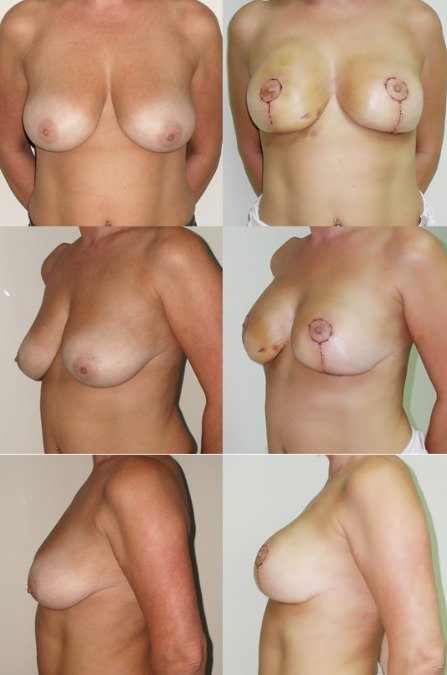
Patient reviews describe individual experiences across different treatments. They are not a breast uplift success rate or a prediction of your result.
EXCELLENT Based on 80 reviews
 Posted on Google
 Vanya Briggs
Trustindex verifies that the original source of the review is Google.
I chose Revitalise in November 2025 for a deep plane facelift, neck lift, temple brow lift, and facial fat grafting. I was quite apprehensive beforehand, but the moment I met the surgeon and the team, all my worries disappeared. They were absolutely incredible , professional, reassuring, and genuinely caring. We stayed at the Mandarin resort, which was lovely overall, and although there are a few small areas that could be improved, the experience surrounding the surgery itself was exceptional. Professor Ahmets hands gave me complete confidence, and the nurses were attentive, kind, and consistently supportive. Our chaperones were brilliant throughout the stay. We had a few different ones, but Abbie supported my husband and me for most of our time there, and she was truly outstanding. Teona was also wonderful at the resort and Lali The rest of the staff appear to be kind too. We really enjoyed our time in Izmir exploring the bazaar, trying different restaurants, seeing the local sights, and having moments of proper relaxation too. The only area I feel could benefit from improvement is the food at the resort. Because it’s quite a distance from other places to eat, having more substantial meal options would make a big difference, especially for Brits recovering from surgery who often need protein-rich, hearty meals. The soups and porridge were delicious, but sometimes you just need a proper meal with meat and carbs to support recovery. Aside from that, everything else was faultless. My husband also had dental work done, and the dentist was extremely attentive. I’ve already booked to return this year for a breast revision and hairline procedure with Revitalise. Thank you so much for everything especially Teona and Abbi ❤️Posted on Google alison richardsonThe whole process from start to finish was very slick, friendly and professional. I was met at the airport by a lovely driver and there was another young lady with me as well. We were dropped to the villa and given some soup which was nice. Next day I had my surgery. Deep plane facelift, neck lift, temporal brow lift and upper eyes. Everything went well and I spent the next 6 nights at the villa recovering. It’s a lovely place to stay and you can even just pick oranges off the trees! They are super delicious. I walked down to the sea one day as well. There are a couple of mini markets you can buy things from. I 100% recommend this clinic to anyone looking to have surgery. It takes all the stress out of it and they even found the flights for me! One lady who was there with me had been there 6 times and when she told me her age I very nearly fell off my chair lol! Will definitely be back possibly for teeth. Thank you all so much and see you again :-)Posted on Google
 Karen longI am almost 4 weeks post op, I had a Mummy Makeover. I am delighted with my results. The care received from all was amazing. I will be going back later this year. Thank you all.Posted on Google
 Arzu AltanMe and my husband went for dental implants in Izmir and after a couple of months evaluating options we choose Revitalize. It was the best decision! We have just completed the second phase of our treatment last Monday and we couldn´t be happier. It is true, it is not painless as the say, but all in all worthed the disconforth we had, during same (few) steps. For sure, if an acquaintance of ours wish to perform outstanding oral surgery at a very good price, we will sure recomend Revitalize.Posted on Google
 Gill BrownJust been to Revitalize for my second time. For someone going alone for surgery which is obviously a scary experience I highly recommended this company. They took fantastic care of me the whole way through and everything is super professional. The staff are all very kind and the accommodation is lovely. Since I've come home they have answered my queries right away too. I met some really great other people at the villa and enjoyed getting to know them and our meal times together. I wouldn't hesitate to book with Revitalize if you are considering it 😊Posted on Google
 Paula Deveney-SwanI had an extended Tummy Tuck in February 2024. The service was outstanding. On arriving the driver was waiting for me to take me to the villa. The villa is just amazing, helpful friendly and experienced staff on call 24/7 The surgeon was friendly and informative The hospital was spotless, I stayed for 1 night before going back to the villa to recover for a further 8 nights The room at the villa had everything I needed and pull cords should help have been needed, thankfully it wasn’t. The grounds and pool were perfect, unfortunately I could only look at the pool due to surgery. February 2025 and I’m back, this time for breast reduction and uplift. Again can’t find fault in anything. Staff always on hand to help, hospital and villa spotless. What next ……Posted on Google
 Sonia BramleyUnparalleled service and care provided. Their unique set up of providing pre- and post-operative support is incredible. You have 24/7 on site support as well as residing with patients undergoing similar procedures. Their English speaking surgeons really listen and treat you as individuals rather than a conveyor belt of procedures. The camaraderie that you build at the villa is unmatchable. I cannot recommend this company highly enough.
CONTACT US
Get a quote for our treatment packages
ANSWERS
Frequently asked questions
What is a breast lift?
A breast lift removes excess skin and reshapes breast tissue. Your surgeon assesses the appropriate technique and nipple position for your anatomy and goals.
Does a breast lift increase breast size?
A lift reshapes the breasts. If additional fullness is a goal, discuss implants and whether a combined or staged approach is appropriate with your surgeon.
Will I have visible scars?
Yes. Incisions leave permanent scars, although they may fade. Ask your surgeon to explain the proposed scar pattern and individual healing risks.
How long is the recovery?
Recovery varies. Follow your surgeon’s advice on dressings, support garments, activity and travel. Confirm your planned stay and obtain individual clearance before flying; a fixed number of days does not establish fitness to travel.
Can I breastfeed after a breast lift?
Discuss future pregnancy and breastfeeding plans with your surgeon before deciding on surgery. Ask about the implications of the proposed technique for your individual case; breastfeeding after surgery cannot be promised.
What does Revitalize include in my breast uplift plan?
Revitalize’s own team arranges your assessment, written plan and agreed practical support. Confirm the surgeon, facility, transfers, bilingual accompaniment, accommodation and follow-up in your quotation. Mandarin Grove in Urla provides private rooms, breakfast and dinner and 24/7 practical support, not clinical care. After you return home, our team helps relay requested updates to your doctor.
Can a breast lift be combined with other procedures?
Your surgeon assesses whether breast uplift should be performed alone, with another procedure or in separate stages. Compare the relevant packages, but confirm suitability and the full scope in your written plan.
This page provides general information, not an individual diagnosis or treatment recommendation. Your surgeon determines suitability and discusses risks, alternatives and recovery. Clinical reference: American Society of Plastic Surgeons guidance on breast lift techniques, risks and recovery.