
Wegovy and Cosmetic Surgery
Wegovy and cosmetic surgery is now one of the most common combinations in modern aesthetic practice. Wegovy (semaglutide) is one of the most widely prescribed weight-management medications, and a substantial proportion of cosmetic surgery patients in 2026 are on it, have recently used it, or are considering starting before booking a procedure. This guide explains how Wegovy interacts with surgery across the most common cosmetic procedures — tummy tuck, facelift, body contouring, BBL, breast surgery, bariatric and others — covering when to stop the medication for anaesthesia safety, how to time your weight loss, when to resume post-op, and what to expect when significant weight loss has changed your body’s contour before surgery.
The clinical principles are the same as for sister medications Ozempic (same molecule, different brand and dose), Mounjaro (different drug, same family) and Saxenda (same family, daily injection). What changes between procedures is mostly the post-op resumption timeline and how the surgeon plans for the body contour you’re presenting with after significant weight loss. This is a YMYL article — your prescribing doctor and the anaesthesia team make the definitive decisions for your specific case. Guidance reflects current consensus from the ASA, AAGBI and major surgical societies.
Table of contents
- The short answer
- What is Wegovy?
- Why so many cosmetic patients are on Wegovy in 2026
- The clinical issue: delayed gastric emptying
- How long to stop Wegovy before surgery
- Wegovy and cosmetic surgery — timeline infographic
- Wegovy timing by procedure
- Weight stability before surgery
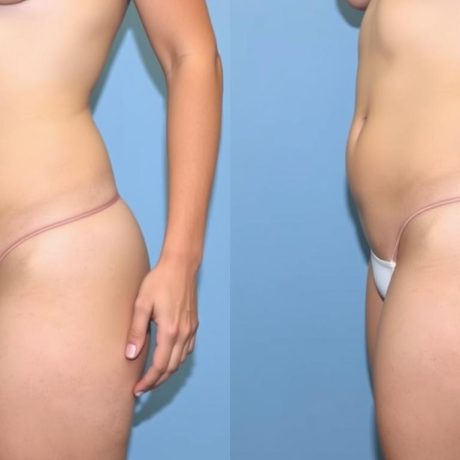
- After significant Wegovy weight loss — what changes
- Resuming Wegovy after surgery
- Wegovy vs Ozempic, Mounjaro, Saxenda
- Why disclosure is non-negotiable
- If your clinic doesn’t ask about Wegovy
- Frequently asked questions
- What to do next
The short answer
Wegovy and cosmetic surgery is a workable combination with appropriate timing. Wegovy should be stopped at least 1 week before any procedure under general anaesthesia (ASA 2023 guidance for weekly GLP-1 medications), sometimes longer at higher doses. The anaesthesia issue is delayed gastric emptying, which raises the risk of aspiration during induction. Beyond the cessation period, your weight should be stable for 2–3 months before surgery for the best long-term result — patients still actively losing weight at surgery can develop new laxity afterward. Wegovy can usually be resumed 2–4 weeks post-op once normal eating is established. Disclose all Wegovy use to your anaesthesia team — concealment is dangerous. The principles apply across tummy tuck, facelift, BBL, liposuction, breast surgery, bariatric and most other elective procedures.
What is Wegovy?
Wegovy is the brand name (Novo Nordisk) for semaglutide at the doses approved for chronic weight management — typically up to 2.4 mg once weekly subcutaneous injection. It contains the same active drug as Ozempic (which uses lower doses approved primarily for type 2 diabetes), and a daily oral version exists as Rybelsus. Wegovy was specifically licensed for weight management.
Clinical effects: semaglutide reduces appetite, increases satiety after meals, and significantly slows gastric emptying. Clinical trials at full Wegovy dose have shown average weight loss in the range of 10–15% of body weight over 68 weeks — comparable to bariatric surgery results in some metrics, while being non-surgical and reversible.
From the surgical perspective, Wegovy and Ozempic are treated identically — they’re the same molecule. The pre-op cessation rules, anaesthesia considerations and resumption timing are the same. Where they differ in practice is that Wegovy patients typically have lost more weight (higher dose, longer use), so the surgical body contour considerations may be more pronounced.
Why so many cosmetic patients are on Wegovy in 2026
Two converging trends:
- Wegovy delivers significant medical weight loss for patients who previously couldn’t reach a healthy stable weight through diet and exercise alone.
- Significant weight loss often produces cosmetic concerns: excess loose skin (abdomen, arms, thighs), facial volume loss (“Ozempic face” / “Wegovy face”), and emerging laxity in breast and neck tissue.
- The natural pathway for many patients: medical weight loss with Wegovy → reach target → consider body contouring or facial cosmetic surgery to address the remaining contour issues.
This combination has fundamentally changed the demographic of body contouring cosmetic surgery — many tummy tuck and arm lift patients in 2026 are post-Wegovy patients with moderate skin laxity rather than the post-massive-weight-loss profile that used to dominate. Surgeons increasingly plan procedures with the GLP-1 patient profile in mind.
The clinical issue: delayed gastric emptying
The reason Wegovy must be stopped before surgery is the gastric effect — not the weight loss itself. Semaglutide significantly slows gastric emptying. Food and fluid can remain in the stomach much longer than usual after eating. During the induction of general anaesthesia, residual stomach content can be regurgitated and inhaled into the lungs — known as aspiration — which can cause aspiration pneumonia or, rarely, more serious airway complications. Standard pre-op fasting (no food for 6 hours, clear fluids up to 2 hours) was designed assuming normal gastric emptying. On Wegovy, that assumption no longer holds. The cessation period allows the stomach to return to normal emptying before surgery.
Several anaesthesia case reports between 2022 and 2024 documented residual gastric content in patients on GLP-1 medications who followed standard fasting protocols. These prompted updated guidance from anaesthesia societies. The risk is procedure-independent — it applies to any surgery under general anaesthesia or deep sedation, which is most cosmetic surgery.
How long to stop Wegovy before surgery
- ASA 2023 guidance: Hold once-weekly GLP-1 medications (including Wegovy/semaglutide) for at least 1 week before procedures requiring general anaesthesia or deep sedation.
- Many practitioners (2024+) have moved toward longer hold times — sometimes up to 2 weeks for higher-dose semaglutide (e.g. Wegovy 2.4 mg dose).
- Extended fasting protocols are also used by some teams: 12-hour fast for solids and 4-hour for clear fluids on the day of surgery, rather than the standard 6/2.
- Pre-op gastric ultrasound is increasingly used in some centres to confirm an empty stomach for higher-risk patients.
Your anaesthesiologist makes the final call. Do not stop or change your Wegovy dose without consulting both your prescribing doctor and the surgical team. Stopping abruptly can also affect appetite and weight management — your prescriber will advise whether to taper, pause, or simply hold one dose, depending on your full picture.

Wegovy timing by procedure
The Wegovy cessation rule (≥1 week before surgery) applies across all procedures involving general anaesthesia. What varies between procedures is the surgical planning and post-op resumption — different procedures present different recovery profiles for restarting Wegovy.
| Procedure | Pre-op Wegovy stop | Post-op resumption | Specific consideration |
|---|---|---|---|
| Tummy tuck | ≥1 week (sometimes 2) | 2–4 weeks post-op | Stable weight 2–3 months pre-op essential for contour result. See Mounjaro before tummy tuck for related guidance. |
| Facelift | ≥1 week (sometimes 2) | 2–4 weeks post-op | Consider fat transfer for “Wegovy face” volume loss. See Ozempic before facelift. |
| BBL | ≥1 week (sometimes 2) | 3–4 weeks post-op | Need adequate donor fat — significant Wegovy weight loss may reduce available fat for graft. |
| Liposuction | ≥1 week (sometimes 2) | 2–3 weeks post-op | Not a weight-loss procedure — works best at stable target weight. |
| Breast surgery | ≥1 week (sometimes 2) | 2–3 weeks post-op | Significant weight loss often produces breast volume/skin changes — surgeon plans accordingly. |
| Arm lift / thigh lift | ≥1 week (sometimes 2) | 2–3 weeks post-op | Common post-Wegovy procedures to address loose skin. |
| Mummy makeover (combination) | ≥1 week (sometimes 2) | 3–4 weeks post-op | Stable weight especially important for combination procedures. |
| Bariatric surgery | ≥1 week (sometimes 2) | Often discontinued long-term post-bariatric, per prescriber | Wegovy and bariatric serve overlapping purposes — discuss with both surgeon and prescriber. |
Always confirm your specific timeline with your surgical team and prescribing doctor.
Weight stability before surgery
Stopping Wegovy for anaesthesia safety is non-negotiable. But there’s a second principle that’s just as important for the surgical result: weight stability for 2–3 months before surgery.
- Patients still actively losing weight at the time of surgery have a higher risk of new skin laxity emerging after the procedure — the body continues to change while the surgical result is set.
- Stable weight means the surgeon is working with the body composition you’ll have for the foreseeable future, producing a result that lasts.
- Most surgeons request 2–3 months at target weight before booking body contouring procedures. Facial procedures may be slightly more flexible but the principle is similar.
The ideal pathway: lose weight on Wegovy → reach a healthy target → maintain for 2–3 months (with Wegovy continued at maintenance dose if your prescriber agrees) → stop Wegovy 1+ weeks pre-op → surgery → resume Wegovy 2–4 weeks post-op as appropriate.
After significant Wegovy weight loss — what changes
Patients arriving for cosmetic surgery after significant Wegovy weight loss often have a distinctive presentation that surgeons now plan around:
- Loose skin and reduced subcutaneous fat — especially abdomen, arms, thighs, breast, neck and face.
- “Wegovy face” / “Ozempic face” — hollow temples, flatter cheeks, deeper folds. Best addressed by facelift + fat transfer.
- Reduced donor fat for procedures like BBL or facial fat transfer — patients with significant weight loss may have less harvestable fat than expected.
- Skin quality changes — rapid weight loss can reduce skin elasticity, particularly in patients over 40. Surgical planning accounts for this.
- Nutritional status — Wegovy can reduce appetite to the point where some patients have suboptimal protein, vitamin and mineral intake. Pre-op nutritional check matters.
Resuming Wegovy after surgery
When to restart Wegovy depends on the procedure and how recovery is going. General principles:
- Wait until you’re eating normally — usually around 2 weeks for most cosmetic procedures.
- Wound healing on track — confirmed at 2-week follow-up.
- Nausea-sensitive procedures (abdominal, facial) — restart cautiously to avoid vomiting that could disturb wound healing.
- Prescriber agrees — they may suggest restarting at a lower dose to re-acclimatise.
- Continued protein and calorie intake for healing — important even after Wegovy resumes appetite suppression.
Many cosmetic surgery patients resume Wegovy between weeks 2 and 4 post-op. Some choose to discontinue at this point if they’ve reached goal weight and feel confident with maintenance through lifestyle. Others continue at maintenance dose long-term per prescriber.
Wegovy vs Ozempic, Mounjaro, Saxenda
| Medication | Active drug | Approved for | Pre-op hold |
|---|---|---|---|
| Wegovy | Semaglutide (high dose) | Weight management | ≥1 week |
| Ozempic | Semaglutide (lower doses) | Type 2 diabetes (often off-label for weight loss) | ≥1 week |
| Rybelsus | Oral semaglutide | 2型糖尿病 | ≥24 hours |
| Mounjaro / Zepbound | Tirzepatide | Type 2 diabetes / weight management | ≥1 week |
| Saxenda | Liraglutide (daily) | Weight management | ≥24 hours |
From a pre-op safety perspective, Wegovy and Ozempic are identical (same molecule). Mounjaro is in the same family with very similar handling. Saxenda is daily and clears faster, requiring only 24-hour hold. Always confirm with your anaesthesia team and prescriber.
Why disclosure is non-negotiable
Concealing Wegovy use from your anaesthesia team is dangerous. Some patients don’t disclose because they’re embarrassed, or worried surgery will be delayed, or unsure whether it counts as “medication.” It does. Anaesthesiologists need to know — for your safety. If you’ve taken Wegovy within the previous 1–2 weeks, tell your anaesthesia team. They may delay surgery, modify the plan, use ultrasound to assess your stomach contents, or proceed with an extended fasting protocol — all of which are safer than concealment.
The same applies to weight-loss medications obtained outside standard medical channels — compounded semaglutide from online pharmacies, “research peptides,” or weight-loss injections of uncertain origin. If you’ve taken anything that might be a GLP-1 (or affect gastric emptying), disclose. Anaesthesiologists are not your prescriber — they’re not there to judge, only to keep you safe.
If your clinic doesn’t ask about Wegovy
By 2026, asking about Wegovy and other GLP-1 medications should be standard pre-op practice at any reputable clinic. If a clinic hasn’t asked whether you’re on any weight-loss medication, that’s a red flag — see our safe clinic verification guide. Disclose anyway, in writing, in your medical history. Insist that the anaesthesiologist sees this disclosure before surgery. A reputable clinic handles this routinely; a clinic that brushes it aside is one to avoid.
Frequently asked questions
Can I have cosmetic surgery while on Wegovy?
Yes, with appropriate timing. Wegovy should be stopped at least 1 week before surgery for anaesthesia safety. Weight should be stable for 2–3 months before surgery for best results. Wegovy can usually be resumed 2–4 weeks post-op once eating is normal and healing is on track.
How long before cosmetic surgery should I stop Wegovy?
Current consensus is at least 1 week (one missed weekly dose) per ASA 2023 guidance. Many surgeons request 2 weeks, particularly at higher semaglutide doses such as Wegovy 2.4 mg. Always confirm with both your prescriber and the surgical team before changing your dose.
Is Wegovy the same as Ozempic before surgery?
Yes — they are the same molecule (semaglutide). Wegovy uses higher doses specifically licensed for weight management; Ozempic uses lower doses primarily for type 2 diabetes. Pre-op cessation rules are identical.
Will Wegovy weight loss affect my cosmetic surgery result?
Not the weight loss itself — but ongoing active weight loss at the time of surgery can. New skin laxity may emerge after the procedure if weight loss continues. Most surgeons want weight stable for 2–3 months before surgery for the best long-term result.
Can I have a tummy tuck on Wegovy?
Yes, with appropriate timing — same principles as for any cosmetic surgery. Stop Wegovy at least 1 week before surgery, ensure weight stability for 2–3 months before booking, and resume 2–4 weeks post-op. See Mounjaro before tummy tuck for the related guide.
What if my surgeon doesn’t ask about Wegovy?
Disclose anyway, in writing in your medical history. Reputable clinics ask about all weight-loss medications routinely. If they don’t ask, that’s a warning sign — but your responsibility to disclose remains. Anaesthesia safety depends on it.
Does Wegovy cause skin laxity?
Significant rapid weight loss — from any cause, including Wegovy — can produce loose skin in areas where fat has reduced. Skin elasticity, age, smoking status and weight loss speed all influence how much. This is one of the reasons many post-Wegovy patients consider body contouring or facelift surgery.
Should I stop Wegovy before bariatric surgery?
Same anaesthesia principles — stop 1+ weeks before surgery. Post-bariatric, Wegovy is often discontinued in the long term because the surgery serves overlapping purposes. Decision is between you, your bariatric surgeon and your Wegovy prescriber.
Can Wegovy and cosmetic surgery be planned together from the start?
Yes — increasingly common. Many patients plan a pathway: Wegovy weight loss over 12+ months → stable target weight → body contouring or facial cosmetic surgery → continued Wegovy maintenance or planned discontinuation. Coordinating prescriber, GP and cosmetic surgeon makes this work smoothly.
What to do next
If you’re on Wegovy and considering cosmetic surgery — any procedure — the most useful first step is a consultation that includes discussion of your weight stability, the right procedure (or combination) for your post-weight-loss body, and Wegovy cessation timing. Revitalize in Turkey routinely discusses GLP-1 medications during pre-op assessment, and our anaesthesia team is familiar with current guidance. Free consultations available in Manchester, London and Liverpool or remotely.
- Book a free consultation
- Mounjaro before tummy tuck
- Ozempic before facelift
- Why BMI matters before surgery
- What is medical clearance?
- Turkey vs UK cosmetic surgery cost
Continue reading our medical tourism in Turkey cluster
- Complete Guide to Medical Tourism in Turkey
- Understanding Surgical Risks
- How Recovery Affects Final Results
- How Smoking Affects Surgery Recovery
- How to Choose a Safe Clinic in Turkey
- 25 Questions to Ask Before Cosmetic Surgery
About the author
[Author name], medical content writer specialising in pre-operative optimisation, GLP-1 medications and post-weight-loss cosmetic surgery.
Medically reviewed by
Dr. [Anaesthesiologist or Plastic Surgeon name], Turkish Ministry of Health Registration No. [XXXX]. Member of the relevant Turkish specialist society.
Last reviewed: 26 May 2026.
This article is for general patient information and does not constitute medical advice. Wegovy is a prescription-only medication; do not start, stop, or change the dose without supervision by the doctor who prescribed it. Anaesthesia guidance on GLP-1 medications evolves with new evidence — your anaesthesiologist gives definitive advice for your specific case. Always disclose all medications, including any obtained outside standard medical channels.



 English
  Afrikaans
  Albanian
  Russian
  German
  Swedish
  Spanish
  Romanian
  Portuguese
  Japanese
  Azerbaijani
  Chinese
  Dutch
Dutch  French
  German (Formal)
  Greek
Greek