

Are you tired of relying on glasses or contact lenses to correct your vision? We are here to guide you through the process of lens replacement surgery, a transformative procedure that can significantly improve your vision quality.
Lens replacement surgery, also known as refractive lens exchange, involves removing the natural lens of the eye and replacing it with an artificial one. Unlike cataract surgery, where the lens is cloudy, in this procedure, the lens is clear but faulty.
We will explore how this procedure can address various vision conditions and reduce your dependence on corrective eyewear. For personalised quotes, please contact us directly.
Key Takeaways
- Understand the basics of lens replacement surgery and its differences from cataract surgery.
- Learn about the various types of replacement lenses available and their benefits.
- Discover how lens replacement surgery can improve your vision quality.
- Find out if you are a suitable candidate for this vision-correcting procedure.
- Understand the recovery process and what to expect after the surgery.
What is Eye Lens Replacement Surgery?
Lens replacement surgery, also known as refractive lens exchange, is a sophisticated surgical procedure designed to improve vision by replacing the eye’s natural lens with an artificial intraocular lens. This procedure is similar to cataract surgery but differs in its purpose and the condition of the lens it replaces.
The Science Behind Lens Replacement
The science behind lens replacement involves precise measurements of the eye to determine the exact power needed for the replacement lens. This ensures optimal vision correction and addresses various vision issues, including short-sightedness, long-sightedness, astigmatism, and presbyopia.
Lens Replacement vs. Cataract Surgery
While both lens replacement and cataract surgery involve removing the natural lens and replacing it with an artificial one, the key difference lies in the condition of the lens being replaced. In cataract surgery, the cloudy lens is removed, whereas in lens replacement surgery, a clear but functionally limited natural lens is replaced to correct vision problems.
The artificial lenses used are multifocal, allowing for clear vision at all distances — near, intermediate, and far. By understanding the fundamental principles of lens replacement, individuals can make informed decisions about their vision correction options.
Who is Suitable for Eye Lens Replacement Surgery?

Understanding who is suitable for eye lens replacement surgery is crucial for those considering the procedure. Lens replacement surgery is typically most suitable for individuals over 40 years of age who require prescription glasses or contact lenses and meet specific eligibility criteria.
Age Considerations
Age is an important factor in determining suitability for lens replacement surgery. Generally, individuals under 21 are not considered ideal candidates as their eyes are still developing. Those between 21 and 40 might be better suited for alternative treatments. There is no upper age limit for Refractive Lens Exchange (RLE), making it a viable option for older patients, including those with cataracts.
Vision Conditions That Can Be Treated
Lens replacement surgery can effectively treat various vision conditions, including short-sightedness (myopia), long-sightedness (hypermetropia), astigmatism, and presbyopia. Ideal candidates should have a stable prescription and be free from certain eye diseases or conditions that might complicate surgery. A comprehensive eye examination is essential to determine suitability for the procedure.
Types of Lens Replacement Procedures
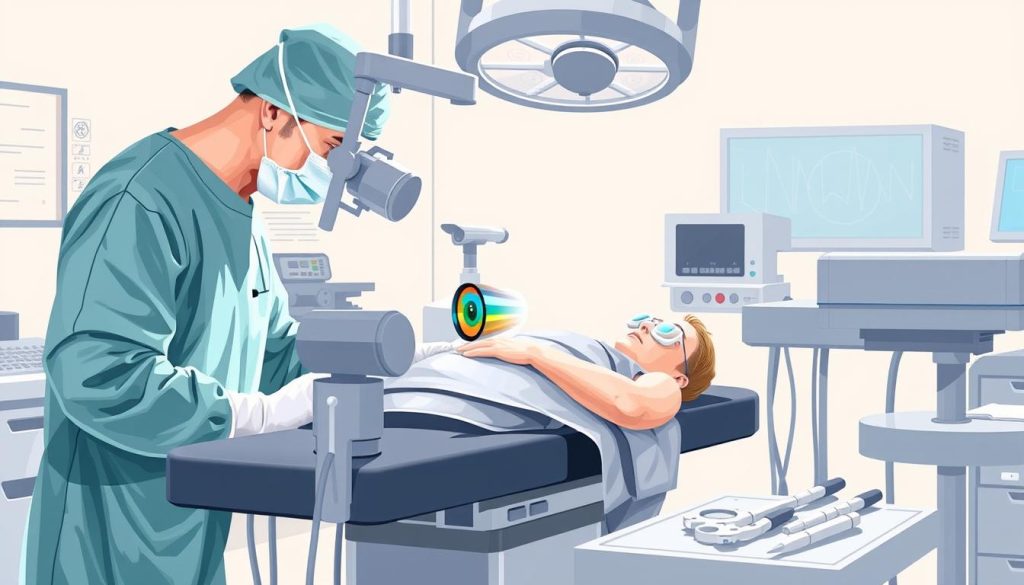
Understanding the different types of lens replacement procedures is crucial for making an informed decision about your eye care. Lens replacement surgery is a sophisticated solution for vision correction, offering various approaches tailored to individual needs.
There are two primary types of lens replacement procedures: Refractive Lens Exchange (RLE) and Phakic Intraocular Lens (PIOL) Surgery. Each is designed to address different vision needs and patient circumstances.
Refractive Lens Exchange (RLE)
RLE involves removing the eye’s natural lens and replacing it with an artificial intraocular lens. This procedure is particularly beneficial for patients over 40 experiencing presbyopia and other refractive errors.
RLE is similar to cataract surgery but is performed before a cataract develops. The goal is to reduce dependence on glasses or contact lenses, improving overall quality of life.
Phakic Intraocular Lens (PIOL) Surgery
PIOL surgery preserves the natural lens while adding an artificial lens to correct vision. This procedure is ideal for younger patients with high prescriptions who are not suitable candidates for laser eye surgery.
By understanding these procedures, you can have more informed discussions during your consultation about which option is best suited to your specific vision requirements. For pricing details, please don’t hesitate to Contact Us.
The Lens Replacement Surgery Procedure

Lens replacement surgery is performed with the utmost care, following a well-established protocol to ensure optimal results. This surgery is similar to cataract surgery, with the primary goal of replacing the natural lens with an artificial one to improve vision.
Before Your Surgery: Preparation Steps
Before undergoing lens replacement surgery, comprehensive eye measurements are conducted, and your visual goals are discussed to determine the most suitable lens type for your needs. Preparation involves following specific instructions regarding medications, fasting requirements, and arranging for someone to accompany you home after the procedure.
During the Procedure: What to Expect
During the surgery, your eye will be numbed with drops, and your pupil will be dilated to allow access to your natural lens. You will remain awake but comfortable throughout the procedure. A tiny incision is made in the eye, and the natural lens is broken up using ultrasonic energy. The fragments are then removed, and the new artificial lens is carefully inserted.
Surgery Duration and Scheduling
The entire lens replacement surgery procedure typically takes only 25-30 minutes per eye and is performed as a day case, meaning you can return home the same day. Surgeries for each eye are usually scheduled separately, with a one to two week interval between procedures to allow for initial healing and adjustment.
For more information on the lens replacement surgery procedure and to discuss your specific needs, please do not hesitate to contact us for pricing details and to schedule a consultation.
Advanced Lens Options for Optimal Results

Advanced lens options play a vital role in ensuring the success of lens replacement surgery, catering to diverse patient needs. Modern lens replacement surgery offers a variety of advanced lens options that can be customised to your specific vision needs and lifestyle requirements.
Multifocal Lenses
Multifocal lenses are designed to provide clear vision at multiple distances (near, intermediate, and far), potentially eliminating the need for reading glasses or bifocals after surgery. These lenses work by incorporating different zones of focus within a single lens, allowing your brain to automatically select the appropriate focus for various activities.
Toric Lenses for Astigmatism
Toric lenses are specially designed to correct astigmatism, a common condition where the cornea has an irregular shape. By correcting this issue, toric lenses provide clearer vision without the need for glasses to correct astigmatism.
Extended Depth of Focus (EDOF) Implants
Extended Depth of Focus (EDOF) implants represent the latest advancement in lens technology, offering enhanced focus range with fewer visual disturbances like glare or halos that can sometimes occur with traditional multifocal lenses. During your consultation, we’ll discuss your visual goals, lifestyle needs, and the advantages of each lens type to help determine which option will provide you with the best possible vision outcomes.
Recovery and Aftercare Following Lens Replacement
Understanding what to expect during the recovery period after lens replacement surgery can significantly impact the outcome of your treatment. Lens replacement surgery is a significant procedure that requires careful aftercare to ensure optimal healing and vision results.

Immediate Post-Surgery Care
Immediately after your lens replacement surgery, you will need someone to escort you home as your eye will be covered with a protective pad and shield, impairing your vision. You will need to wear this protective gear continuously for the first 24 hours and then at night for one week, as advised by your surgeon.
The Healing Timeline
You may experience blurry vision for the first few days after surgery, which will gradually clear up. Your vision should stabilise within two to four weeks. To aid healing and prevent infection, you will need to use prescribed eye drops for approximately four weeks.
Activity Restrictions and Returning to Normal Life
To ensure proper healing, avoid strenuous exercise, swimming, and extended computer use for at least two weeks following your surgery. You can typically resume driving once your vision meets the DVLA requirements, which varies between patients but often occurs within a few days to a week.
Benefits and Success Rates of Eye Lens Replacement Surgery

Eye lens replacement surgery has emerged as a highly effective solution for vision correction. This procedure offers numerous benefits, including significantly improved vision and a reduced reliance on glasses or contact lenses.
Vision Improvement Outcomes
Lens replacement surgery boasts impressive success rates, with approximately 95% of patients achieving independence from glasses or contact lenses for most activities. The vision improvement outcomes are typically excellent, with most patients experiencing enhanced vision quality across all distances.
Long-term Advantages
The long-term advantages of lens replacement surgery include freedom from progressive vision deterioration associated with age-related conditions like presbyopia and cataracts. Additionally, the artificial lenses used in the surgery do not deteriorate over time, providing a permanent solution to vision problems. Many patients report an improved quality of life following the surgery, enjoying greater convenience and confidence in their daily activities.
Conclusion: Taking the Next Step Towards Better Vision
Lens replacement surgery is a significant step towards achieving clearer vision, and we’re here to support you every step of the way. If you’re considering this procedure, the next step is to schedule a comprehensive consultation to determine if you’re a suitable candidate.
During your initial consultation, we’ll conduct a thorough eye examination and discuss your vision goals. Many patients find that the long-term value of reduced dependence on glasses or contact lenses, combined with improved vision quality, makes lens replacement surgery a worthwhile investment.
To take the next step towards clearer, more convenient vision, contact our team to arrange your consultation today. We provide detailed information and answer all your questions before you make any decisions about eye surgery.
FAQ
What is the difference between refractive lens exchange and cataract surgery?
Refractive lens exchange is a procedure where the natural lens is replaced with an intraocular lens to correct refractive errors, whereas cataract surgery involves removing a cloudy lens (cataract) and replacing it with an artificial lens. While both procedures involve lens replacement, the primary goal of refractive lens exchange is to correct vision problems, not to address cataracts.
How long does the lens replacement procedure take?
The actual surgical procedure typically takes around 15-30 minutes per eye. However, we advise patients to plan for a few hours at the clinic to account for preparation and recovery time.
What are the benefits of multifocal lenses?
Multifocal lenses are designed to provide clear vision at multiple distances, reducing dependence on glasses or contact lenses. They work by distributing light across different focal points, allowing for near, intermediate, and far vision.
Can I still develop cataracts after lens replacement surgery?
If you undergo refractive lens exchange with a standard intraocular lens, you may still be at risk of developing cataracts in the future, although this is relatively rare. However, with advanced lens designs, such as multifocal or EDOF lenses, the risk is significantly reduced.
How soon can I resume normal activities after lens replacement surgery?
Most patients can resume normal activities within a few days to a week after surgery. However, we recommend avoiding heavy lifting, bending, or strenuous activities for a few weeks to ensure proper healing.
Will I need glasses or contact lenses after lens replacement surgery?
While lens replacement surgery can significantly reduce dependence on glasses or contact lenses, some patients may still require corrective eyewear for certain tasks, such as reading or driving at night.
Can astigmatism be corrected with lens replacement surgery?
Yes, astigmatism can be corrected with toric intraocular lenses, which are specifically designed to address this condition. Our surgeon will assess your suitability for toric lenses during the consultation.
💠 Considering Lens Replacement Surgeries in Turkey?
Meet our board-certified surgeons, explore transparent pricing and our structured aftercare process.
Explore Our Lens Replacement Surgeries →