
ACL SURGERY
TREATMENT PROCESS

VIP Stay at Mandarin Grove Health and Wellness Retreat

TOTAL STAY
7 Nights

24/7 aftercare service including a bilingual chaperone to accompany you during your hospital stay.
Fully Registered Private Hospital
Fout: Contactformulier niet gevonden.
Fout: Contactformulier niet gevonden.
ACL Surgery in Turkey
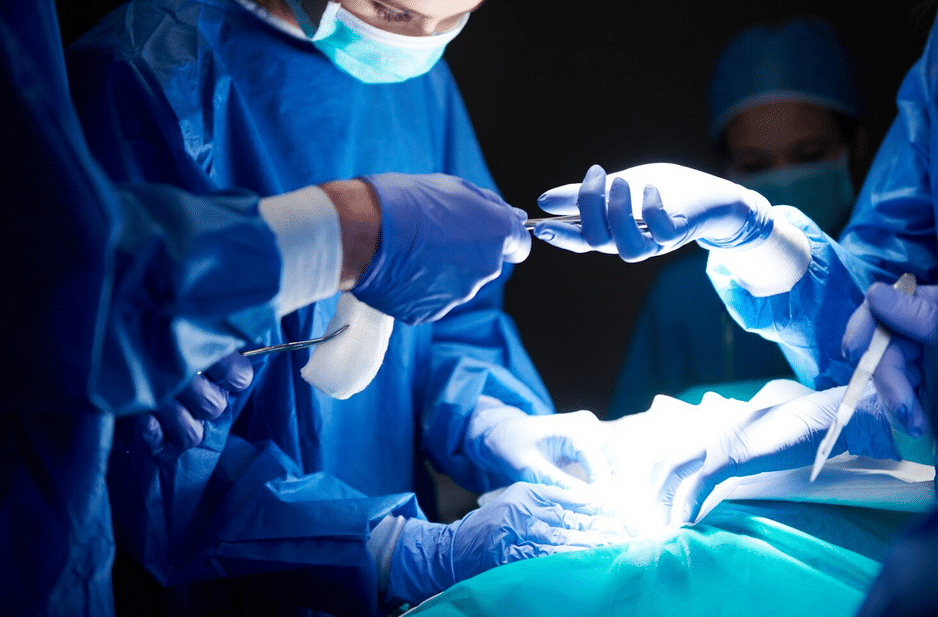
ACL surgery, medically referred to as anterior cruciate ligament (ACL) reconstruction, is a common orthopaedic procedure performed to restore knee stability after an ACL tear. The ACL is one of the key ligaments that stabilise the knee joint, and injury to this structure often occurs during sports, sudden twisting movements, or traumatic accidents. In Turkey, ACL surgery is carried out using modern arthroscopic techniques within orthopaedic centres that follow internationally accepted treatment protocols.
This article provides a detailed, educational overview of ACL surgery in Turkey, including what an ACL injury is, who may need surgery, how the procedure is performed, recovery expectations, potential risks, and why international patients often consider Turkey for orthopaedic care.
What Is the Anterior Cruciate Ligament (ACL)?
The anterior cruciate ligament is a strong band of connective tissue located in the centre of the knee joint. It connects the thigh bone (femur) to the shin bone (tibia) and plays a crucial role in controlling forward movement and rotational stability of the knee.
An ACL injury typically occurs when the ligament is overstretched or torn, often during:
-
Sudden changes in direction
-
Pivoting or twisting movements
-
Jumping and awkward landings
-
Direct impact to the knee
Understanding ACL Injuries
Types of ACL Injuries
-
Grade 1: Mild stretch with minimal instability
-
Grade 2: Partial tear with moderate instability
-
Grade 3: Complete tear causing significant knee instability
Complete ACL tears do not heal on their own and are the most common indication for surgical treatment.
Symptoms of an ACL Tear
Common symptoms associated with ACL injuries include:
-
A popping sensation at the time of injury
-
Immediate swelling of the knee
-
Knee instability or “giving way”
-
Pain during movement or weight-bearing
-
Reduced range of motion
Accurate diagnosis is essential to determine the most appropriate treatment approach.
When Is ACL Surgery Recommended?
Not all ACL injuries require surgery. The decision depends on activity level, knee stability, and associated injuries.
ACL Surgery May Be Recommended For:
-
Complete ACL ruptures
-
Persistent knee instability despite physiotherapy
-
Athletes wishing to return to pivoting sports
-
Combined injuries (meniscus or cartilage damage)
-
Younger or physically active individuals
Some patients with low activity demands may manage with rehabilitation alone, under medical guidance.
Pre-Operative Assessment in Turkey
Before ACL surgery, a comprehensive evaluation is performed.
Pre-Surgical Assessment Includes
-
Clinical knee examination
-
MRI scanning to confirm ligament damage
-
Assessment of meniscus and cartilage
-
Beoordeling van medische geschiedenis
-
Pre-operative physiotherapy in some cases
This assessment helps determine the optimal timing and surgical technique.
What Is ACL Reconstruction Surgery?
ACL surgery does not involve stitching the torn ligament together. Instead, it involves reconstructing the ligament using a graft.
Common Graft Types
-
Hamstring tendon graft
-
Patellar tendon graft
-
Quadriceps tendon graft
-
Donor (allograft) tissue in selected cases
The choice of graft depends on patient anatomy, activity level, and surgeon preference.
How ACL Surgery Is Performed
Arthroscopic Technique
ACL reconstruction is usually performed using minimally invasive arthroscopic surgery.
Stap voor stap overzicht
-
Anaesthesia
General or spinal anaesthesia is administered. -
Arthroscopy
Small incisions are made, and a camera is inserted to visualise the knee joint. -
Graft Preparation
The chosen graft is prepared to replace the torn ACL. -
Tunnel Creation
Small tunnels are drilled in the femur and tibia. -
Graft Placement
The graft is positioned and secured with surgical fixation devices. -
Closure
Incisions are closed, and the knee is bandaged.
The procedure typically takes 1–2 hours.
Hospital Stay and Immediate Aftercare
ACL surgery usually requires a short hospital stay.
Immediate Post-Operative Care
-
Same-day discharge or 1-night stay
-
Pain management and swelling control
-
Use of knee brace if advised
-
Crutches for assisted walking
Early mobilisation is encouraged under guidance.
Recovery and Rehabilitation After ACL Surgery
Rehabilitation is a critical component of successful ACL surgery.
Early Recovery (First 2–4 Weeks)
-
Swelling reduction
-
Regaining knee range of motion
-
Partial weight-bearing with crutches
-
Initiation of physiotherapy
Intermediate Phase (1–3 Months)
-
Strengthening of thigh muscles
-
Improved balance and coordination
-
Gradual increase in activity
Late Rehabilitation (3–9 Months)
-
Sport-specific training
-
Plyometric and agility exercises
-
Return-to-sport assessment
Full recovery can take 6 to 9 months, depending on individual progress.
Risico's en mogelijke complicaties
ACL surgery is widely considered safe, but potential risks exist.
Mogelijke complicaties
-
Infection
-
Blood clots
-
Knee stiffness
-
Graft failure or re-tear
-
Persistent instability
Adherence to rehabilitation protocols significantly reduces complication risk.
Long-Term Outcomes of ACL Surgery
Most patients experience improved knee stability and function after surgery.
Expected Outcomes
-
Restoration of knee stability
-
Improved confidence during movement
-
Ability to return to sports or active lifestyle
Long-term success depends on surgical technique, rehabilitation quality, and patient compliance.
Why Patients Consider Turkey for ACL Surgery
Turkey is increasingly considered by international patients for orthopaedic procedures, including ACL surgery.
Common Reasons
-
Orthopaedic surgeons experienced in sports injuries
-
Modern hospitals with advanced imaging and arthroscopy
-
Structured rehabilitation programmes
-
Accessibility for international patients
Many patients from the UK and Europe choose to undergo ACL surgery in Kalkoen as part of planned orthopaedic care.
Veelgestelde vragen (FAQ)
1. Is ACL surgery always necessary?
No. Some partial tears can be managed non-surgically, depending on stability and activity level.
2. How painful is ACL surgery?
Post-operative pain is generally manageable with medication and improves over time.
3. When can I walk after ACL surgery?
Most patients begin walking with crutches within days of surgery.
4. Can I return to sports after ACL surgery?
Yes, many patients return to sports after completing rehabilitation, usually after 6–9 months.
5. Can the ACL tear again?
Re-injury is possible, especially if rehabilitation guidelines are not followed.
Conclusie
ACL surgery in Turkey is a well-established orthopaedic procedure designed to restore knee stability and function following ligament injury. By understanding the nature of ACL injuries, the surgical process, recovery timeline, and potential risks, patients can make informed decisions about their treatment. Successful outcomes rely on accurate diagnosis, skilled surgical execution, and commitment to structured rehabilitation.
Medische disclaimer: De informatie in dit artikel is alleen bedoeld voor algemene informatieve doeleinden en mag niet worden beschouwd als medisch advies. Raadpleeg altijd een gekwalificeerde zorgverlener voordat u medische beslissingen neemt.
 English
  Afrikaans
  Albanian
  Russian
  German
  Swedish
  Spanish
  Romanian
  Portuguese
  Japanese
  Azerbaijani
  Chinese
  Dutch
Dutch  French
  German (Formal)
  Greek
Greek